



Drape Edge

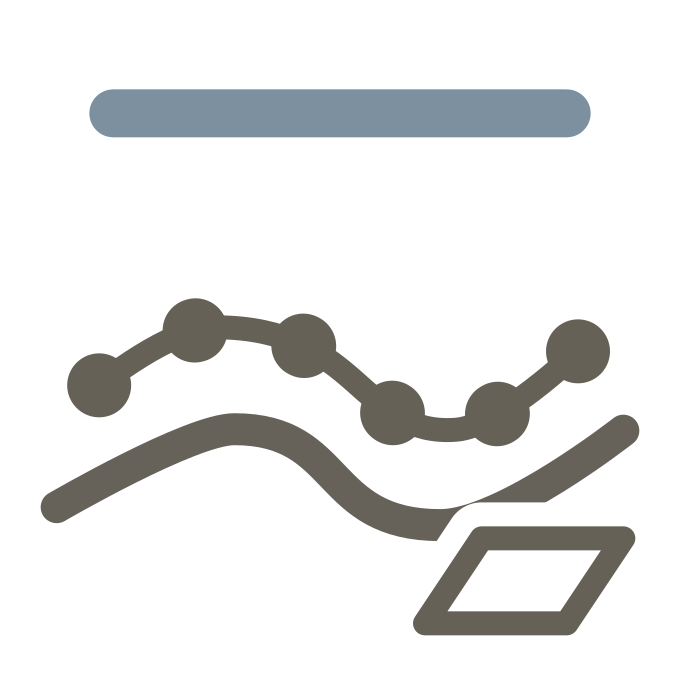
Project selection edges to terrain surface, and subdivide them, in new group.

Simple utility tool to conform edges. Useful to shoot edges up or down to hit terrain surface. Draped edges may then be used as input for other commands, like Grade.

Type:  Prep
Menu:  Extensions > Landshape > Prep > Drape Edge

Input

  • One group containing edges.
  • Raw edges.

Understading Drape Edge

Drape Edge is a utility command for editing geometry. The draped result you may then use as control groups.

  • Drape Edge works on input above or below the terrain.
  • You can Drape on terrain, on void, or both.
  • You can drape in Batch.

Draping Groups vs Raw Geometry

  • If you are in the start context, select a Group, and run Drape Edge, you will drape a copy of the edges in your selected group.
  • Currently, if you work inside a group, and select raw geometry, and run Drape Edge, you will drape the edges directly, not a copy of them. The reason is that this makes it much easier to work inside Grade groups, iteratively draping edges, Grading from inside the Grade group, selecting edges, Grading, and so on.

Parameters

  • Drape Edge will subdivide the projected result, using active Resolution.
  • Drape Edge has two modes. These give very different results.
    Mode 1 is Smash. It first smashes the input, and then drapes it onto the terrain.
    Mode 2 is Upright. Upright mode tries to keep the internal elevations of the the input, when draping it onto the terrain. Upright Drape is useful to drape defining edges sidewalks, traffic islands and other local protrusions.

    If you Select the Upright Edges, then Embed them, then Grade them, you should be able to quickly encode your hardscape as a terrain feature.

    Please note that your input never must have any vertical drops. If you wish to Embed, Drape, and Grade in sidewalks, you first need to offset the upper or lower sidewalk rise ever so slightly, so their edges are distinct in plan, and do not overlap

Pro Tip – Pick Me Up 💡

Sometimes, selecting naked edges on terrain can be tricky. To simplify selecting edges close on terrain, try this. First, clear any selection so nothing is selected. Then, start Drape Edge. In the pickphase, click the edge.

The pickphase has built-in logic that makes edges easier to hit, wihtout also selecting terrain.

With the selection completed, you can directly run antoher command. Or just hit e.g. Space to exit the pick tool, keeping your selection.

Landshape's built-in pick system facilitates selecting surface edgework in a single click.


🌱 ...this Learn section is still incomplete. Expect more content in a future Landshape update. Keep Landshape updated and check back soon.

Face
Drape Face
Learn Landshape — Prep. Drape Edge

Drape Edge

Project selection edges to terrain surface, and subdivide them, in new group.

Simple utility tool to conform edges. Useful to shoot edges up or down to hit terrain surface. Draped edges may then be used as input for other commands, like Grade.

Type:  Prep
Menu:  Extensions > Landshape > Prep > Drape Edge

Input

  • One group containing edges.
  • Raw edges.

Understading Drape Edge

Drape Edge is a utility command for editing geometry. The draped result you may then use as control groups.

  • Drape Edge works on input above or below the terrain.
  • You can Drape on terrain, on void, or both.
  • You can drape in Batch.

Draping Groups vs Raw Geometry

  • If you are in the start context, select a Group, and run Drape Edge, you will drape a copy of the edges in your selected group.
  • Currently, if you work inside a group, and select raw geometry, and run Drape Edge, you will drape the edges directly, not a copy of them. The reason is that this makes it much easier to work inside Grade groups, iteratively draping edges, Grading from inside the Grade group, selecting edges, Grading, and so on.

Parameters

  • Drape Edge will subdivide the projected result, using active Resolution.
  • Drape Edge has two modes. These give very different results.
    Mode 1 is Smash. It first smashes the input, and then drapes it onto the terrain.
    Mode 2 is Upright. Upright mode tries to keep the internal elevations of the the input, when draping it onto the terrain. Upright Drape is useful to drape defining edges sidewalks, traffic islands and other local protrusions.

    If you Select the Upright Edges, then Embed them, then Grade them, you should be able to quickly encode your hardscape as a terrain feature.

    Please note that your input never must have any vertical drops. If you wish to Embed, Drape, and Grade in sidewalks, you first need to offset the upper or lower sidewalk rise ever so slightly, so their edges are distinct in plan, and do not overlap

Pro Tip – Pick Me Up 💡

Sometimes, selecting naked edges on terrain can be tricky. To simplify selecting edges close on terrain, try this. First, clear any selection so nothing is selected. Then, start Drape Edge. In the pickphase, click the edge.

The pickphase has built-in logic that makes edges easier to hit, wihtout also selecting terrain.

With the selection completed, you can directly run antoher command. Or just hit e.g. Space to exit the pick tool, keeping your selection.

Landshape's built-in pick system facilitates selecting surface edgework in a single click.


🌱 ...this Learn section is still incomplete. Expect more content in a future Landshape update. Keep Landshape updated and check back soon.

Face
Drape Face